By Jacob Cramer, Educational Artist
A four-year-old’s brain is a sensory engine, designed to learn through movement, exploration, and experience. Yet many traditional learning environments ask young children to do the opposite: sit still, stay quiet, and absorb information passively.
It’s like expecting a bird to learn to fly without ever leaving the nest.
To build a strong foundation for kindergarten and beyond, children need opportunities to actively engage with the world around them. In education research and in my experience, few tools are as powerful as creative play and drama.
How Dramatic and Creative Play Build Essential Early Learning Skills
1. Drama Strengthens Emotional Regulation and Social Skills
Young children experience big emotions, but they often lack the tools to understand or manage them in the moment. And just like adults, they need distance from an emotional experience before they can reflect on it, learn from it, and develop strategies for handling similar situations in the future.
Drama provides exactly that opportunity.
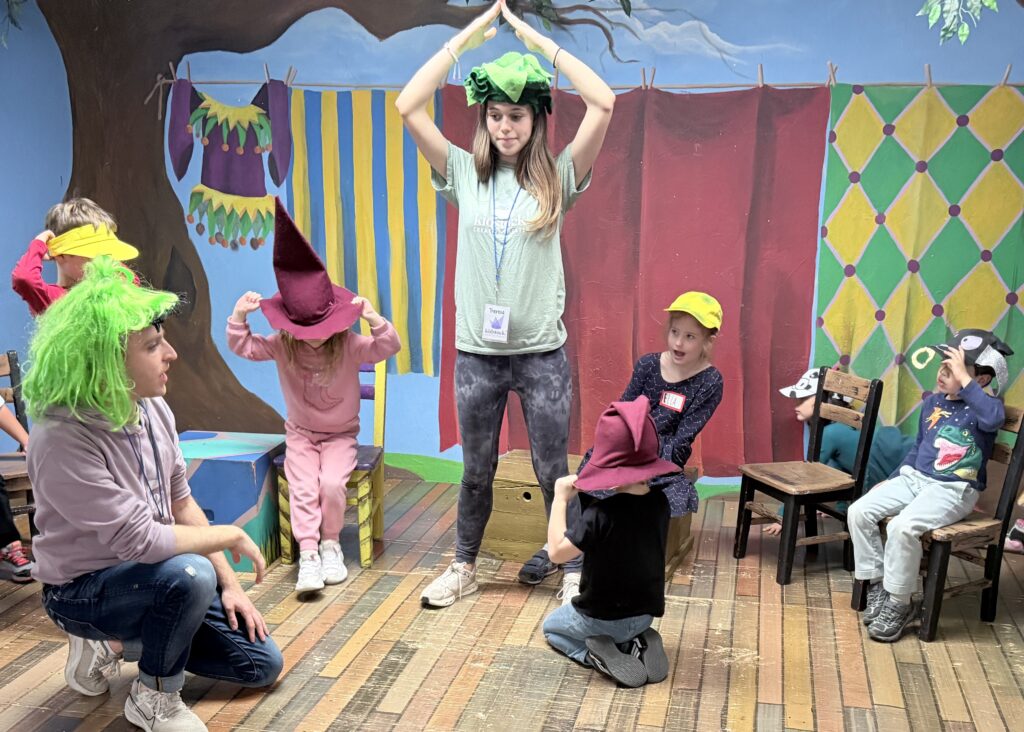
When we step into a character from a story or invent our own unique problems to solve during play, we can slow down time, pause, ask open-ended questions, and give kids the perspective they need to practice empathy, cooperation, and problem-solving with peers. To practice cooperation, we may practice packing for a trip with just one shared suitcase. To build confidence, we might practice crawling through a dark cave and verbalizing positive statements we can use in other situations.
2. Stories Build Literacy, Vocabulary, and Communication
Research consistently shows that drama-based learning is highly effective for language development. Children learn language best when words are connected to meaningful experiences rather than isolated memorization.
Imagine a child hearing the word seagull during a trip to the beach. The word may quickly fade from memory.
But when that same child reads a story about seagulls, pretends to soar through the sky as one, acts out searching for fish, and mimics its calls, the vocabulary becomes connected to movement, emotion, and imagination.
Through interactive stories, children don’t just learn new words—they experience them.
3. Creative Participation Improves Learning and Memory
Research shows that storytelling improves children’s ability to recall information and understand narratives. When educators use movement, gestures, facial expressions, and character voices, children demonstrate stronger listening comprehension and long-term retention. Active participation amplifies these benefits even further.
Whether children are using hand motions to represent ideas, taking on a character’s perspective, or solving problems within an imaginary world, they become emotionally invested in the learning process.
How I Bring Theater-Based Learning to Life
I’ve spent years witnessing the transformative power of theater in early childhood education.
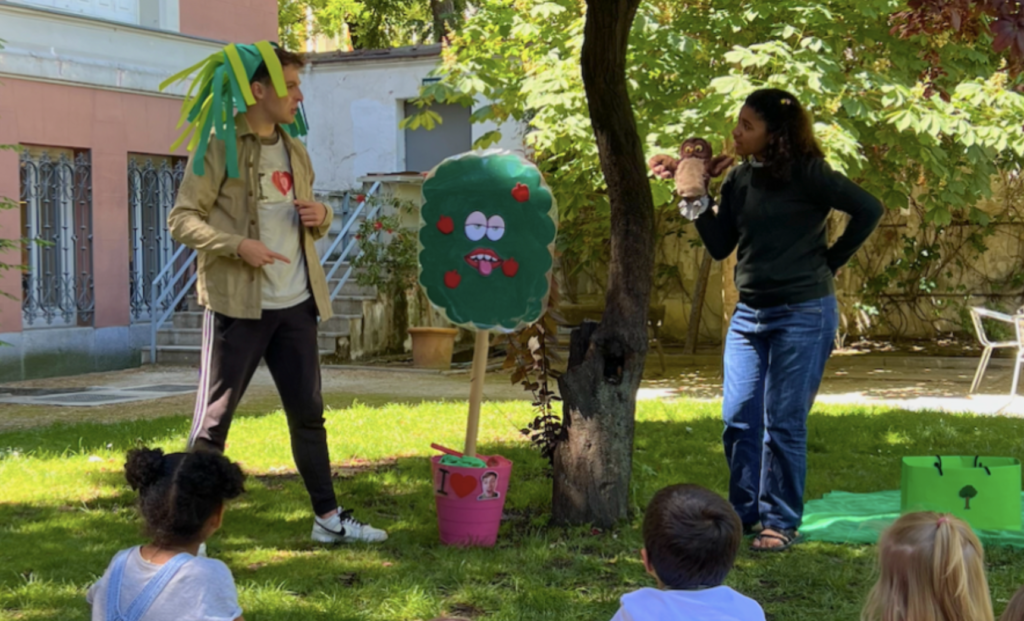
As a Fulbright grantee and Master’s student in bilingual education at Universidad de Alcalá, I developed a pre-Kindergarten drama program focused on social-emotional learning and aligned with the National Core Arts Standards. The program remains in use today, and the results have been remarkable.
After one year of participation in the program, teachers reported growth in children’s oral language, creativity, confidence, and social skills. What’s more, children would recall moments from a single 30-minute dramatic experience months later. One of my favorite examples came from a play called Play Fair, Bear!. Six months after our performance, families shared stories of children referencing the eponymous bear while working through sharing conflicts at home. One child even kept the paper cookie he decorated during the experience and gave it a kiss every night before bed.
Those moments reinforce something powerful: meaningful learning happens when children are emotionally connected to what they experience, and that’s what drama gives us.
Developing Jingle’s Clubhouse
Despite the growing body of research supporting arts-based learning, there remains a significant lack of participatory theater in education programs specifically designed for U.S. preschoolers.
Yet this is precisely the group that stands to benefit the most.
Now at Kidstock!, I’m excited to collaborate with our team of educators to start filling that gap with Jingle’s Clubhouse, a developmentally-targeted arts program designed to build the cognitive and social foundations for kindergarten in a small-group environment. We’ll be using hands-on arts immersion—think drama, visual art, music, movement, and self-expression—to practice collaboration, problem-solving, motor skills, and creativity. It is exactly what these young minds need, and together, we’ll learn through the ways most natural to the 4-5 age group.
We must stop treating arts education as a luxury or a distraction from essential early learning. Theater does not detract from early childhood learning—it deeply enriches it. So at Jingle’s Clubhouse, we’re embracing what early childhood research—and children themselves—have been telling us all along: Play is serious learning!
About the Author
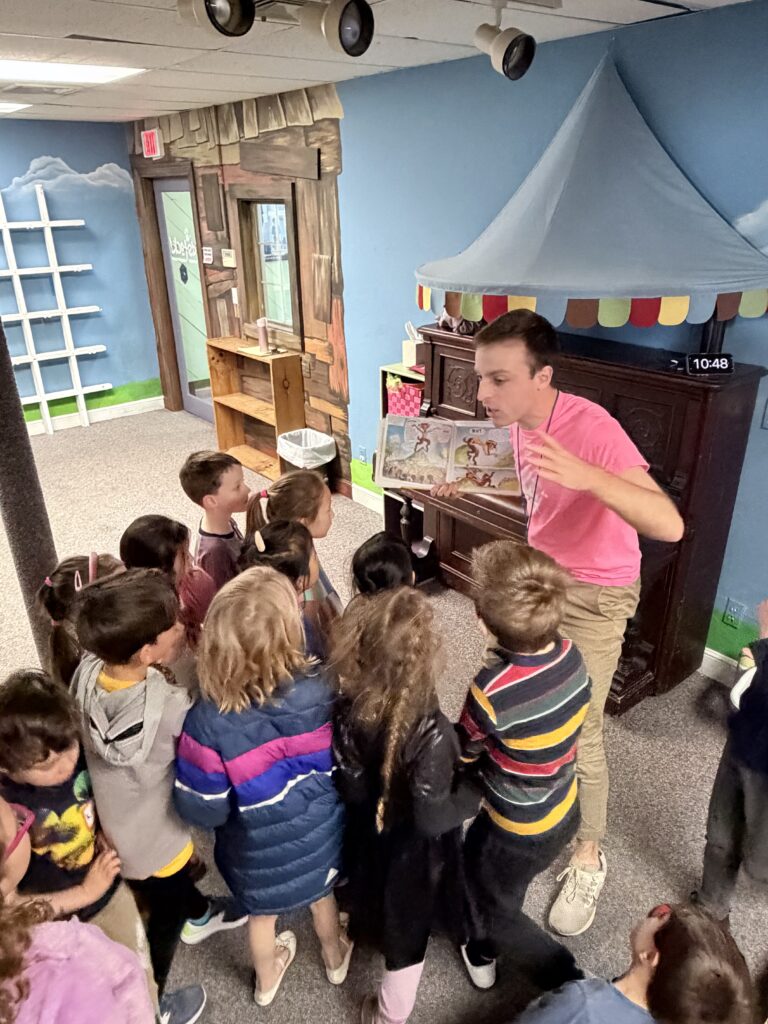
Jacob Cramer, Educational Artist at Kidstock! Creative Theater
Jacob Cramer is a storyteller, theater educator, and creative program designer dedicated to inspiring young audiences. A graduate of Yale University and the Universidad de Alcalá in Spain, he has designed and led theater experiences that support creativity, confidence, and social-emotional learning.